In This Guide
- What the Great Migration Actually Is
- Month-by-Month Calendar
- Understanding River Crossings
- How to Plan Around It
- What It Costs
What the Great Migration Actually Is
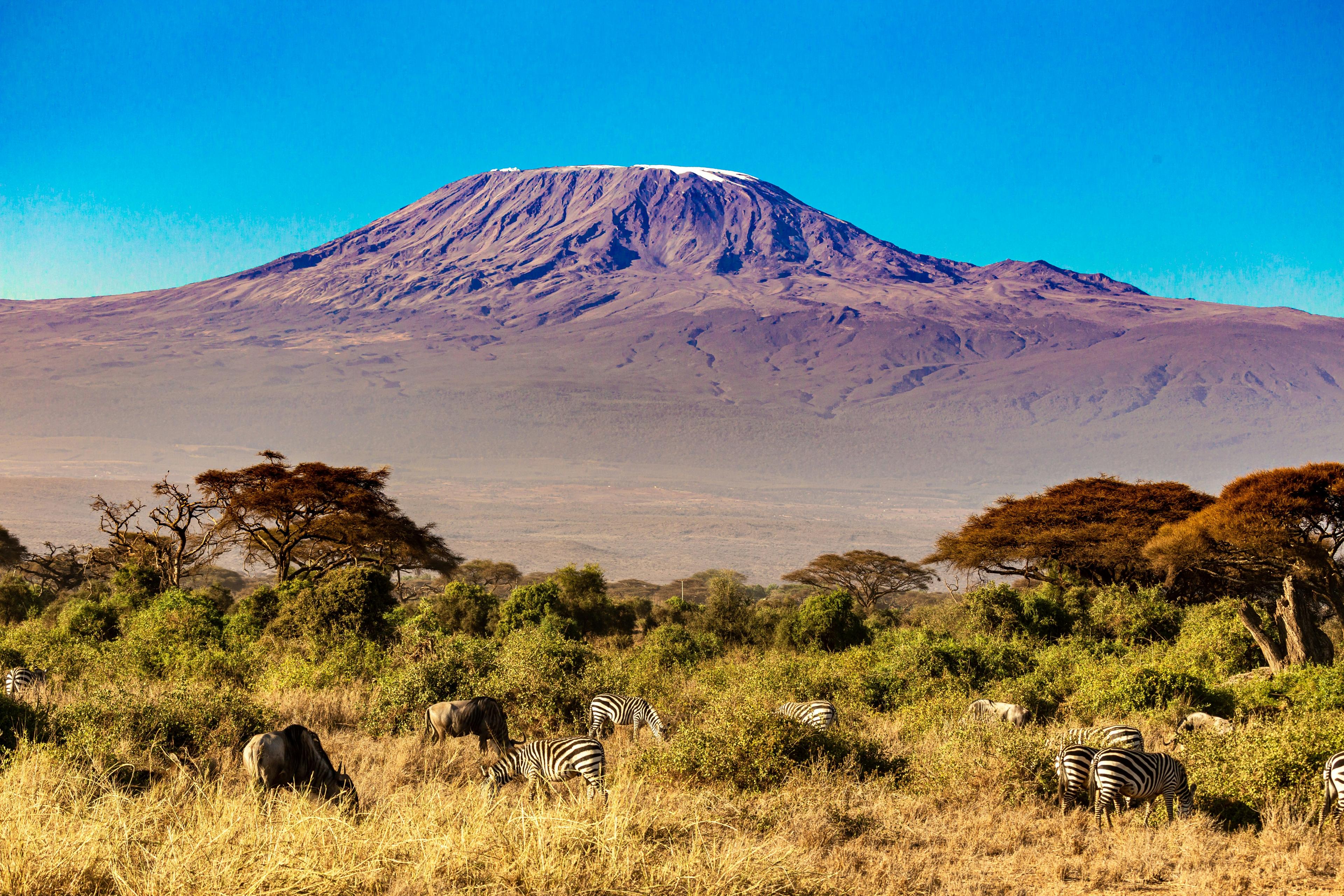
The Great Migration is the continuous, year-round movement of roughly 1.5 million wildebeest, alongside several hundred thousand zebra and gazelle, in a clockwise loop through the Serengeti-Mara ecosystem, spanning both Tanzania and Kenya. It isn't a single event with a start and end date, it's a perpetual cycle driven entirely by rainfall and the search for fresh grazing. That's why exact dates shift slightly every year, and why any operator promising a guaranteed date should be taken with a grain of salt.
Month-by-Month Calendar
| Months | Location | What's Happening |
|---|---|---|
| Jan–Mar | Southern Serengeti, Ndutu Plains | Calving season, thousands of wildebeest calves born daily, drawing intense predator activity |
| Apr–May | Central Serengeti moving toward Western Corridor | Long rains, herds begin their push northwest as southern plains are grazed down |
| Jun | Western Corridor, Grumeti River | First major river crossing obstacle, smaller and less crowded than the Mara crossings but just as intense |
| Jul | Northern Serengeti approaching the Mara River | Early arrivals and first crossing attempts as the herd's leading edge reaches the river |
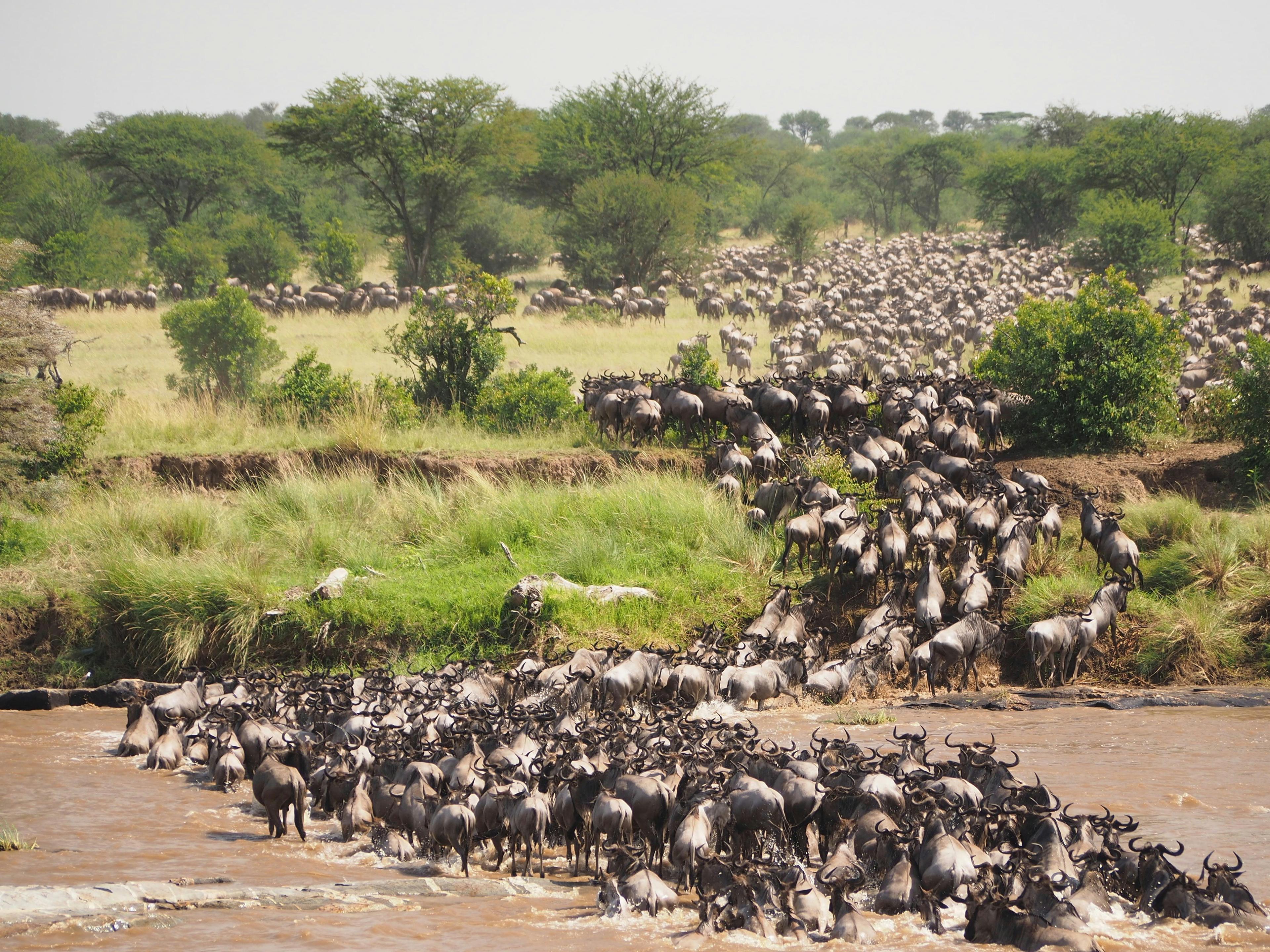
| Aug–Sep | Northern Serengeti & Maasai Mara | Peak season, the famous Mara River crossings, frequent and dramatic, this is what most people picture as "the migration" |
| Oct | Maasai Mara, tail end of crossings | Crossing activity begins tapering off as short rains approach and herds sense fresh grazing to the south |
| Nov–Dec | Eastern Serengeti, returning south | Short rains trigger the long journey back to the southern plains, less concentrated, scattered columns, fewer tourists |
Understanding River Crossings
There are two major river crossings to know about, and they are genuinely different experiences.
The Grumeti River (June)
Smaller in scale than the Mara crossings, but home to some of the largest Nile crocodiles in Africa. Because these crossings happen at a handful of points along the river in the Western Corridor and are driven by unpredictable grass and water conditions, it helps to base yourself in the corridor for at least two to three nights to give yourself a fair chance of witnessing one.
The Mara River (late July–October, peaking August–September)
This is the iconic scene most people associate with the migration, tens of thousands of wildebeest crossing at once, with crocodiles waiting below. August and September represent the statistical peak for crossing frequency, though this also means the most vehicles at popular crossing points.
How to Plan Around It
- Want the classic river crossing spectacle? Aim for late July through September, and book 8-12 months in advance, as prime camps near crossing points sell out well ahead of the season
- Want fewer crowds but still dramatic action? Consider June for the Grumeti crossings, or the southward "reverse migration" in October-November
- More interested in predator action and newborn calves than crossings? January-March in the Ndutu area offers dense wildlife concentrations with a fraction of the peak-season crowds
- Limited on time? A minimum of 5-7 days is generally recommended to properly track the herds and allow for more than one attempt at a crossing sighting
What It Costs
Migration safaris generally range from around $250-450 per person per day for mid-range tented camps, up to $800-1,500+ per day for premium mobile camps that reposition with the herds throughout the season. Because peak-season camps near crossing points have limited capacity, prices rise and availability tightens the closer you get to July-September.
Because timing and positioning matter so much, working with a guide who tracks the herds' movements in real time, rather than a fixed itinerary booked months in advance without local updates, makes a real difference in whether you actually see a crossing.
Want to time your safari to the migration?
Tell us your travel dates and what you most want to see, crossings, calving, or general wildlife, and we'll build an itinerary that puts you in the right place with a trusted local guide.