KILIMANJARO ROUTES: PROS AND CONS
There are seven different Kilimanjaro climbing routes to choose from, each with various pros and cons to suit the capabilities of the hiker. They all differ in length, difficulty, scenery, traffic, accommodation and a myriad of varying factors.
The Adelaid Tour team are experts at defining the best route for your journey... The most popular routes with our clients are the Machame Route, Marangu Route or Lemosho route.
MACHAME ROUTE
Also known as the “Whiskey Route”, Kilimanjaro’s Machame Route is one the most popular climbing routes in Tanzania. Better yet, this route has a fantastically high success rate.
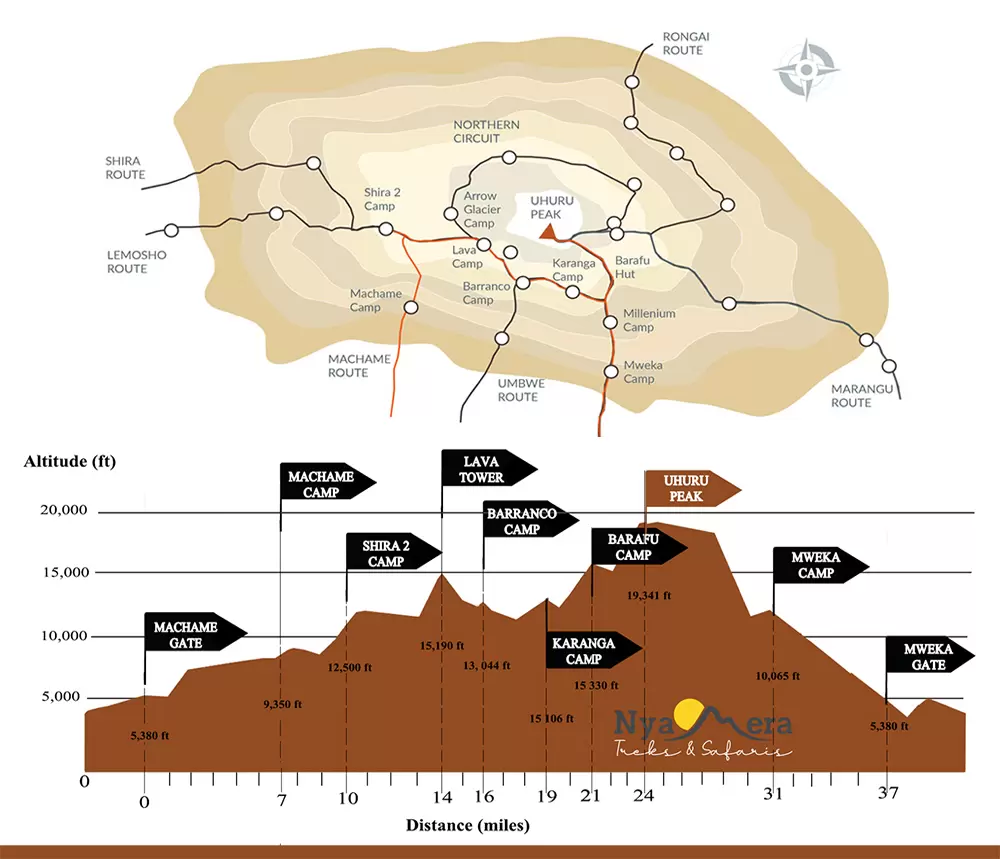 Climbing Kilimanjaro through Machame route
During this route, you will walk through the green rainforest to the amazing Shira Plateau...
PRO: The Machame Route is less expensive than most of the others.
CON: This route can be quite busy, especially during the peak season.
MARANGU ROUTE
This route, nicknamed the “Coca-Cola” route, has a reputation for being one of the easiest paths on the mountain.
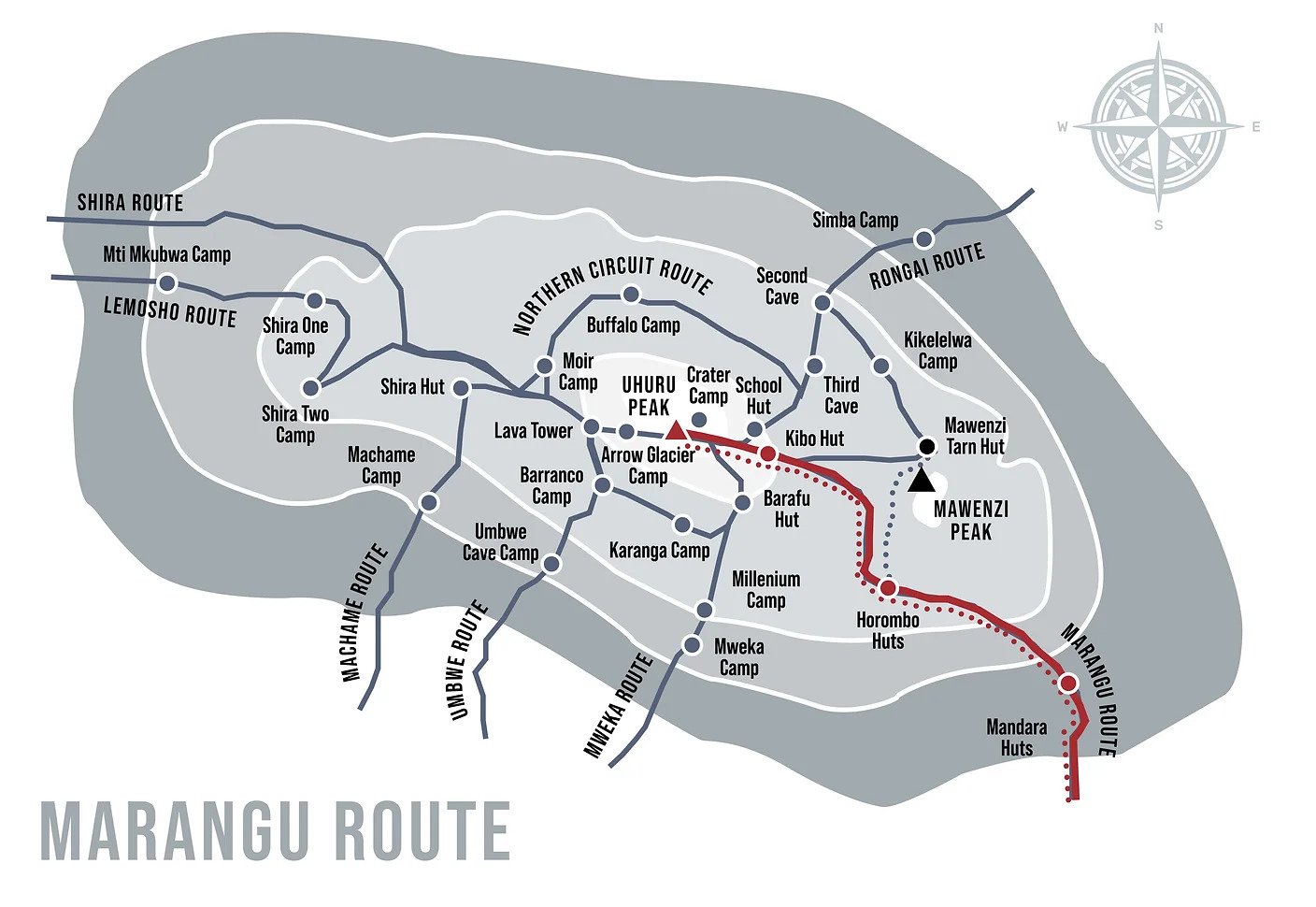 Marangu route climb
Some climbers prefer this route because of the hut accommodation, in contrast to camping in tents...
PRO: One of the cheapest and quickest Mount Kilimanjaro routes.
CON: You do the same trail for your descent as you did for your ascent.
LEMOSHO ROUTE
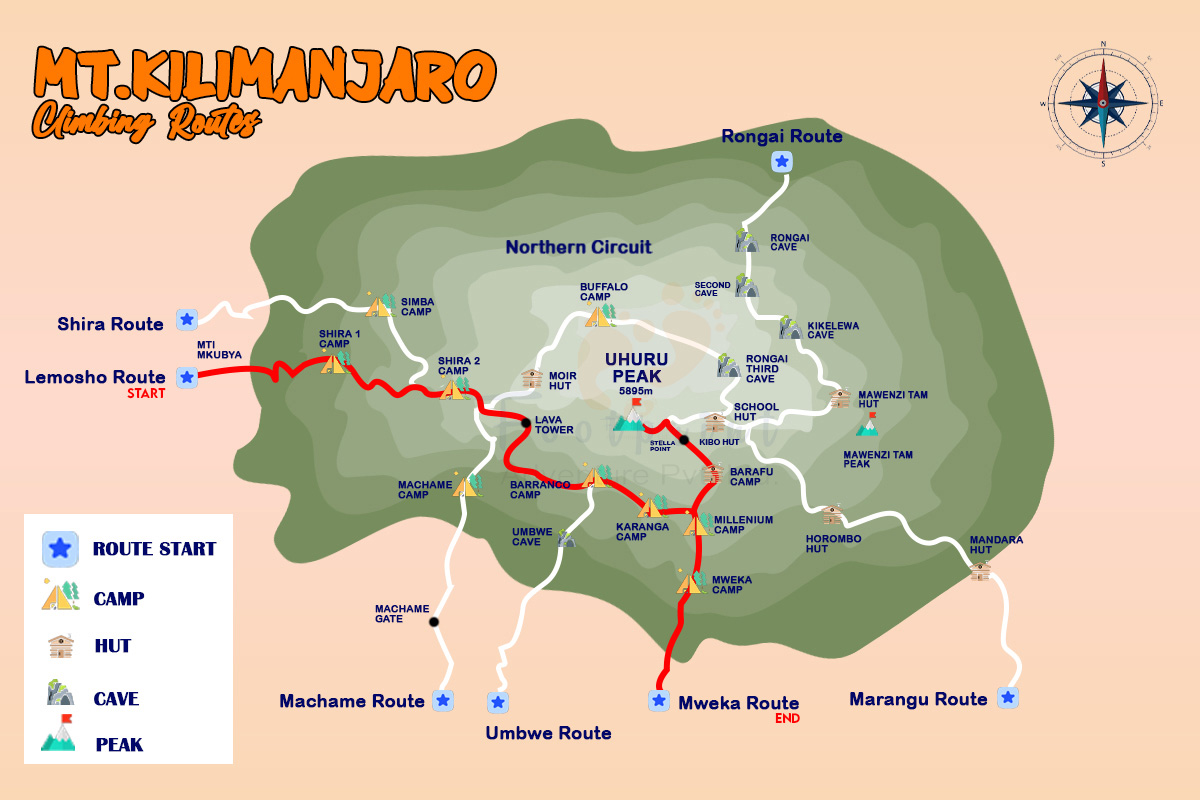
The Lemosho Route is a beautiful and unique route, known for its breathtaking views. In contrary to other Mount Kilimanjaro climbing routes, it starts on the western side of Kilimanjaro. Because of this, the Leomosho Route is less crowded with climbers and offers a much more secluded hiking experience.
 Marangu route climb
Better yet, the Lemosho trail is completely unspoiled, making for a breathtakingly beautiful adventure up to the famous Shira Plateau. After a few days, the Lemosho Route joins the Machame Route at Lava Tower. You can do this route in 7 or 8 days, and it does require a decent level of fitness! .
PRO:The price is definitely worth it! The Lemosho route gives climbers plenty of time to acclimatize properly, the views are spectacular and the success rates to reach the summit are high. This is one of the most beautiful and complete routes to climb Kilimanjaro. --> > .
CON:Lemosho is undoubtedly a more expensive route – it’s a long trail and requires extra transport to the other side of the mountain. .